The first conversation costs nothing, and you don't have to sign anything after it.
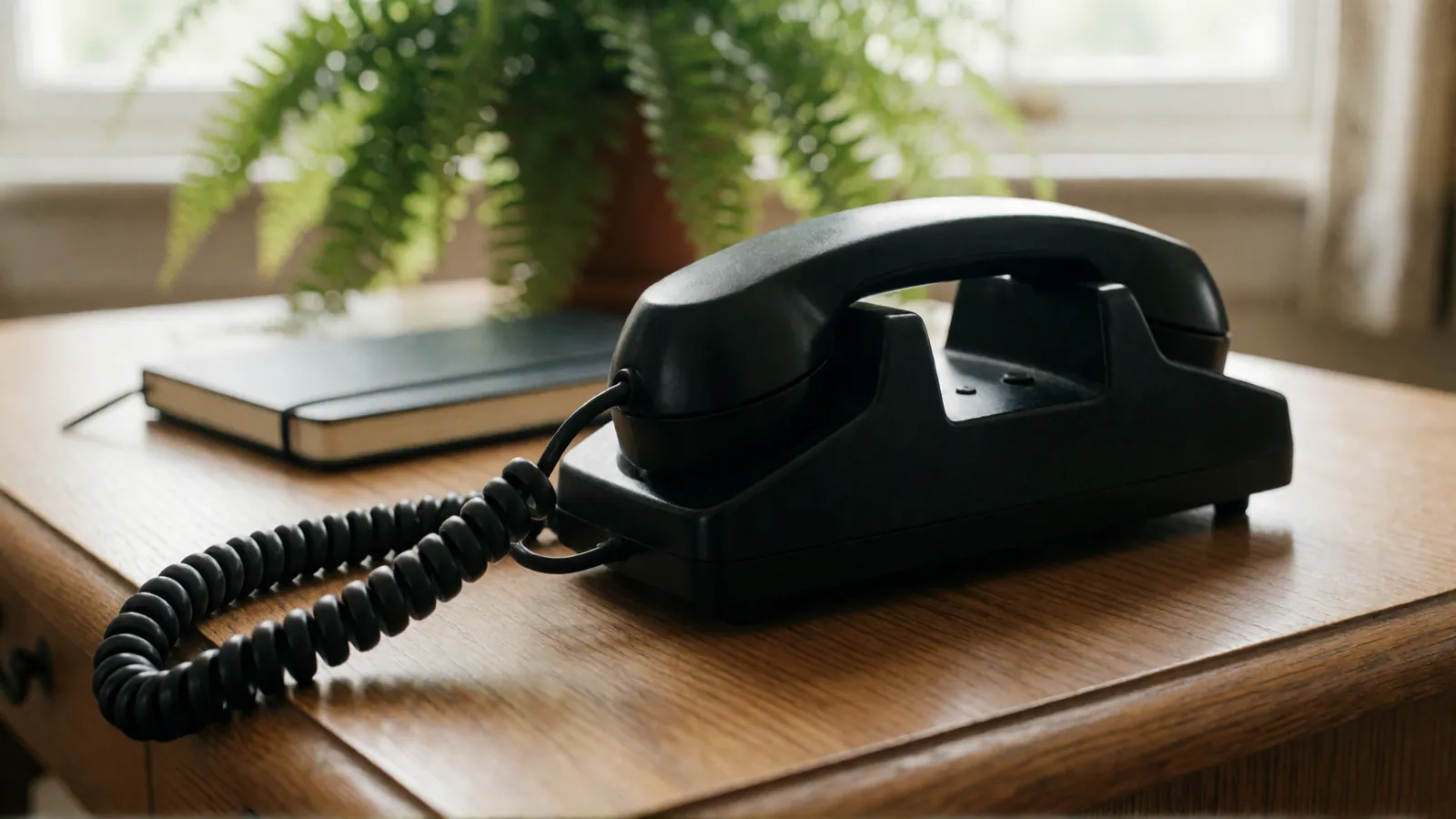
A plain black desk telephone with no keypad, its handset in the cradle and its coiled cord curling across an oak desk, a closed notebook and a fern behind.

The office

Desk phones set up and looked after, on a line your business buys

Telephone service from a carrier, in your business's name; the desk phones set up one by one at a published price, and the help desk behind them after that.

  • $45 a phone, before sales tax
  • Monday to Friday, 8 am to 6 pm

AI-generated illustration. Not a real office or business.

The line and the phones are two different things

Office telephone service now usually runs over the internet rather than the old copper lines. The carrier provides the numbers and the service; the desk phones connect to it through the office network.

That split decides who does what. The carrier sells the line, bills for it and holds the numbers in your business's name. The desk phones are set up one by one, each with its extension, its voicemail and its place in the groups of phones that ring together, and after that the help desk helps with them like any other piece of office equipment.

  • The line is yours, from a carrier.
  • Set up per phone.

Telephone service is bought from a phone carrier, in your business's name. We set up the desk phones, at $45 a phone plus sales tax, and the help desk helps with them after that.

Where calls go

The settings that matter most are the ones nobody thinks about until a call is missed.

What happens when nobody answers, what callers hear when the office is closed, which phones ring for which number, and where calls go when the office's internet is down. Carriers can usually send calls on to mobile phones when the desk phones cannot be reached, and that is set up and tried before it is needed.

The telephones

Old phones and missed calls are a phone-service question first: the carrier sells the line, and the desk phones are set up one by one.

What we would look at first

  • Keeping your numbers when the service moves.
  • Where calls go when nobody answers, and when the internet is down.
  • Which desk phones can stay.

Keeping your numbers

A business's telephone numbers can usually go with it when the service moves to another carrier. The new carrier asks the old one to release them, and the request has to match the old account exactly: the business's name and address as the old carrier holds them, and the account details it issued. A request with a mismatch is turned down and has to start again.

The old service stays on until the numbers have moved. Cancelling it first is the surest way to put a number at risk, so nothing is cancelled until the new service is ringing.

Before the old lines go, it is worth listing everything else that uses them: a fax machine, a card terminal, an elevator telephone. Each needs its own answer before the change, not after it.

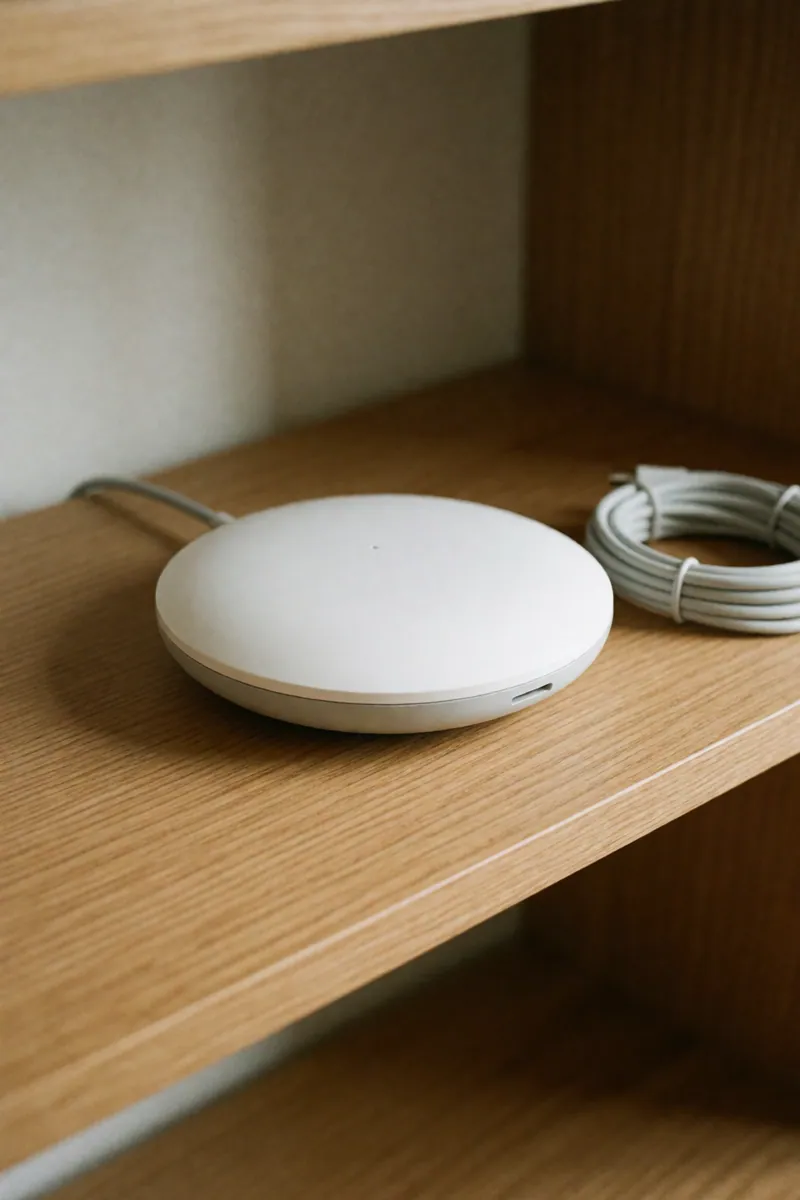
A round white domed access point with a small port on its rim and a gray cable, a coiled gray cable beside it on an oak shelf.AI-generated illustration. Not a real office or business.

Hana Petrakis-Obi

Networks, Wi-Fi and phones

Looks after firewalls, switches, the Wi-Fi and the desk phones.

Hana walks an office with the Wi-Fi before she moves an access point.

Hana gives visitors a network of their own.

The picture is a still of this person's desk or tools, not a portrait.

Which desk phones can stay

Desk phones from an earlier service can sometimes be set up for a new one and sometimes cannot: some are tied to the provider that supplied them, and some are too old to get updates. Each model is checked before anything is ordered, so nobody buys phones twice or keeps ones that will not work.

Phones that draw their power through the network cable need a switch in the closet that supplies it, and new cable to a desk is a licensed electrician's work, named on the written price.

Calls, and the office's internet connection

A telephone call over the internet needs very little of the connection, but it needs it steadily. A large upload or a video call in the next room can make a voice break up, so the firewall is set to let the phones' traffic through first and everything else wait its turn. Complaints about crackling calls often end in the closet, not at the phone.

For an office where the telephone is the business, such as a practice's front desk or an agency that sells over the phone, a second internet connection from a different company is worth talking about, so that the phones have somewhere to go when the first one is down. Where calls go if both are down is a carrier setting, and it is written down with the rest.

People come and go, and their phones follow the same checklist as their accounts. A new starter's desk phone, extension and voicemail are ready on the first morning; a leaver's extension is pointed at whoever takes over their calls, and their voicemail is cleared once somebody has listened to it.

The price

Setting up a phone is a published price per phone. The telephone service itself is between your business and its carrier, and none of the plans' prices includes either.

Work on the equipment itself, a server looked after and a desk phone set up are taxed as well.
The linePriceSales tax
Setting up a desk phone you have bought$45 a phoneTaxed

Related services

The IT health check

Try the IT health check: ten questions about how your office works, the areas worth talking about and the plans at their published prices, in about two minutes. Sending it to us books nothing.