Limits
How these pictures were made
Every picture here was made from a description and carries a label saying so. None shows a face, a screen or a maker's name, and none shows a real office.
AI-generated illustration. Not a real office or business.
Generated from descriptions, never photographed
This IT company is invented, so there is no team to photograph, no client's office it has worked in and no network closet it has tidied. Every picture on the site was produced by an image model from a written description, and each one says so where it appears.
Every picture on this site was generated. Most have nobody in them; two show a technician's hands and forearms, never a face, and are labeled as generated people. There is no screen, laptop or keyboard in any of them, and no cable, box or faceplate carries a maker's name or a label.
- We do not show a real person in a picture: every picture here is generated and says so.
The six rules the pictures follow
Each rule decides what a description may ask for and what has to stay out of the frame.
No face in any picture
Most pictures have nobody in them. Two show a technician's hands and forearms, never a face, and carry the label for a generated person.
No screen, no laptop, no keyboard
A real screen would show somebody's data and a laptop lid carries its maker's logo, so there is no monitor, laptop, tablet, keyboard or phone screen in any picture.
No maker's name on the equipment
Real network equipment carries names and port numbers, so every box, faceplate and cable shown is plain, and a picture that came back lettered was cropped or made again.
No camera, alarm or card reader
This company installs none of them, so none appears on a wall, a ceiling or a door.
Queens offices, as they are
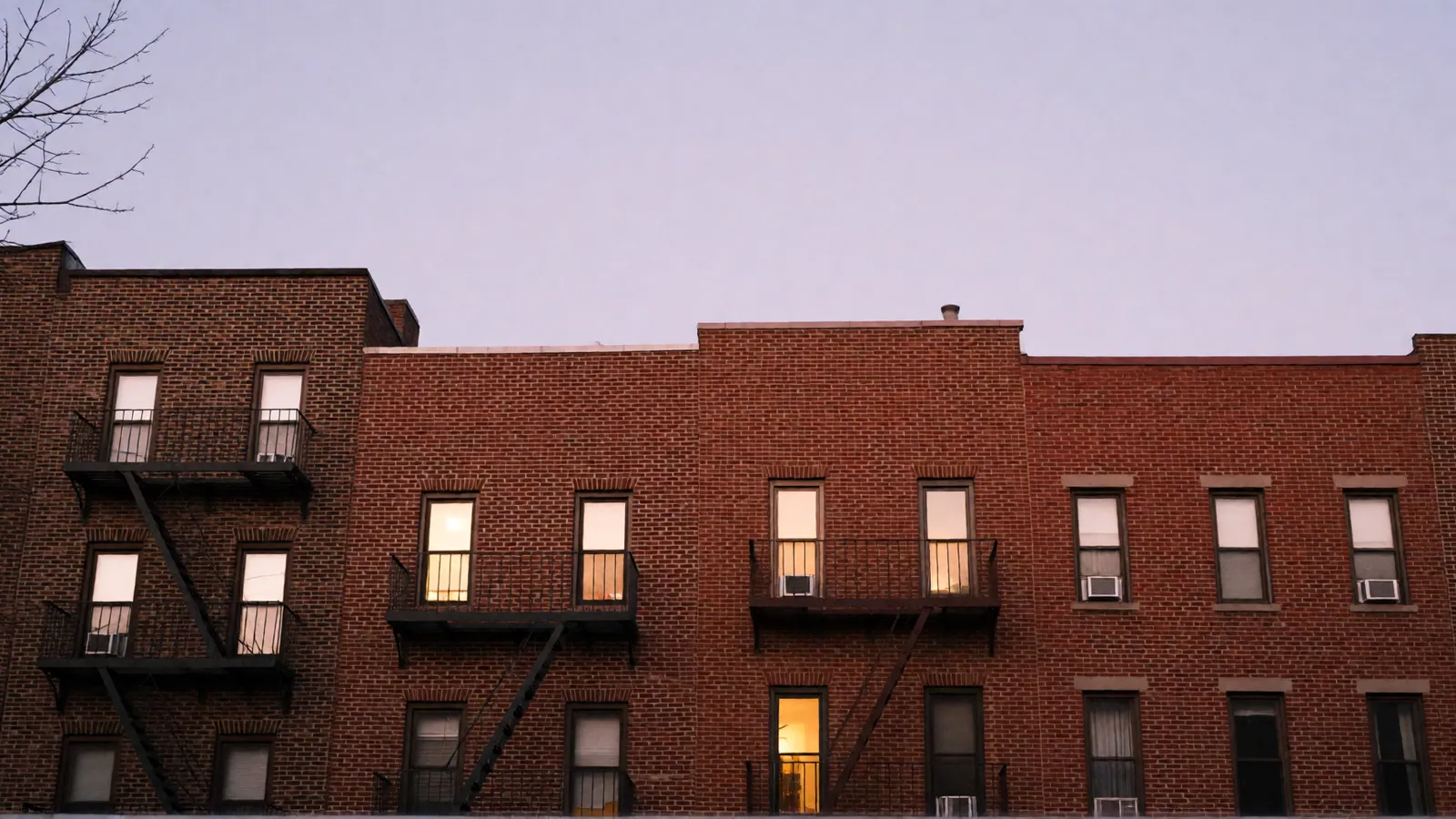
Small offices in older brick buildings: radiators under the windows, drop ceilings, a network closet that was once a coat cupboard, and no skyline anybody could name.
Every picture labeled
Every picture carries the label "AI-generated illustration. Not a real office or business.", or with a person in it "AI-generated illustration. Not a real person, office or business.".
The two labels
AI-generated illustration. Not a real office or business.
On every picture of an office, a network closet, a desk or a tool. A generated office can look exactly like one on your own block, and the label says this one belongs to nobody and shows no job this company did.
AI-generated illustration. Not a real person, office or business.
On the pictures with a technician's hands in them. The hands are generated and belong to nobody, and the label says so on the picture itself.
A page's header picture, and a wide picture inside a page, carry the label in a line beside them. Every other picture carries it on the picture itself, and none appears without one.
Why every picture carries a label
Each checked against its source in October 2026.
- N.Y. General Business Law § 396-b (opens the source in a new tab) An advertisement that uses a generated person says so conspicuously.
- N.Y. General Business Law § 350 (opens the source in a new tab) False advertising in the conduct of any business is unlawful in New York.
The first rule is about generated people, which is why the pictures with a technician's hands in them carry the label for a person. The second is the plainer reason for labeling everything else: a generated office with a tidy network closet is easy to take for work this company did, and nobody choosing an IT company should be shown work that was never done without being told so.
Why nothing in them can be read
The commonest picture on an IT company's site is a row of smiling people in front of monitors. Both halves of it are ruled out here. A face would be a person who does not exist, presented as somebody who might answer the telephone, and a screen would have to show something: a real one would show somebody's data, and an invented one would show an interface that looks like a product.
Network equipment is the other trap. Real switches, firewalls and access points carry their makers' names and numbered ports, and a picture of one advertises whoever made it. This site names no maker, so the equipment in its pictures is plain, and a picture that came back from the image model with lettering on it was cropped or made again, as the rules above say.
There is no camera, alarm or card reader on any wall or door either, because a picture is a statement about the work, and this company installs none of them.
A real company built on this design would show its own people and its own work, photographed as they are, with nothing a visitor could take for a badge, a brand or a promise it does not keep.
The IT health check
Try the IT health check: ten questions about how your office works, the areas worth talking about and the plans at their published prices, in about two minutes. Sending it to us books nothing.